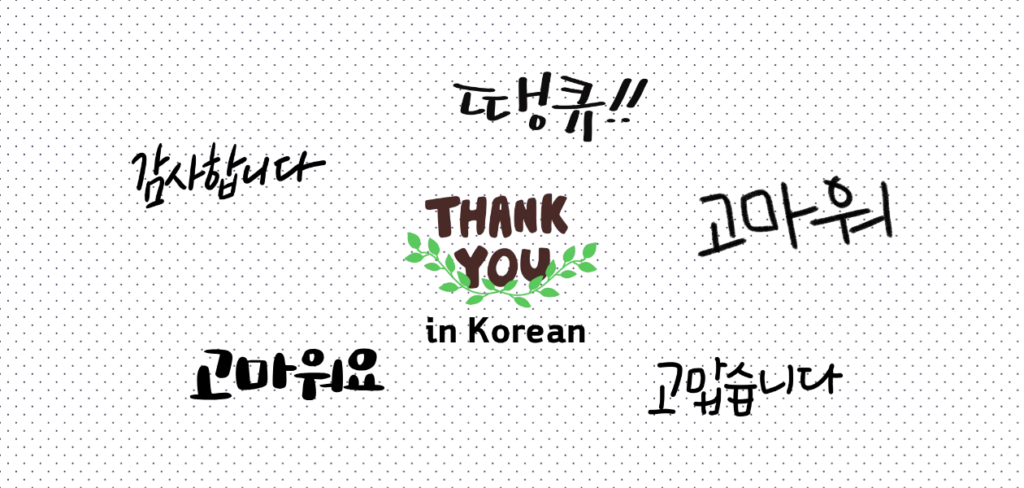
If you are learning Korean, you probably already know one word for “thank you”: 감사합니다 (Gamsahamnida). In this guide, you’ll learn how to say thank you in Korean naturally in different situations.
It’s one of the first expressions many Korean learners memorize. But if you listen to real conversations in Korea, you’ll quickly notice something interesting – people don’t always say 감사합니다 (gamsahamnida).
But in real life, Koreans don’t always use this expression. Depending on the situation, relationship, and level of politeness, Korean often use different expressions to show gratitude. Sometimes they even express appreciation through actions rather than words.
1. 감사합니다 (Gamsahamnida): The Most Polite Way
감사합니다(gamsahamnida) is the most formal and widely recognized way to say thank you in Korean. This expression is polite and respectful, making it appropriate for situations where formalty matters.
You will commonly hear 감사합니다(gamsahamnida) in situations such as:
- speaking to strangers
- customer service interactions
- professional or workplaces settings
- talking to someone older than you
For example:
- 감사합니다. 정말 도움이 됐어요. (Thank you, That was really helpul.)
Because this phrase is quite formal, it can sometimes sound a little distant when used with close friends or family members. That’s why Korean often switch to other expressions in casual situations.
2. 고마워요 (Gomawoyo): Polite but Friendly
고마워요 (gomawowy) is a softer and more friendly version of thank you. This phrase is still polite, but it feels more warm and friendly than 감사합니다.
People often use it with:
- coworkers
- acquaintances
- neighbors
- people slightly older than them
For example:
- 고마워요. 다음에 제가 커피 살게요. (Thanks. I’ll buy coffee next time.)
This expression is very useful for Korean learners because it strikes a good balance between politeness and friendliness.
3. 고마워 (Gomawo): Casual Thank You
고마워 (gomawo) is the casual version used with people you are close to or younger than you.
Typical situations include:
- friends
- siblings
- classmates
- people of the same age group or younger than you
For example:
- 고마워! 덕분에 숙제 끝냈어. (Thanks! I finished my homework thanks to you.)
In Korean culture, using the appropriate speech level is important. Saying 고마워 (gomawo) to someone much older than you could sound rude, so context matters.
4. 땡큐 (Thank you): Informal and Playful
Interestingly, some Koreans – especially younger people occasionally say “땡큐 (thank you)”, the English word often written in Korean as 땡큐. This expression is usually playful and informal.
It’s commonly used among younger people or close friends in relaxed situations.
Example:
- 땡큐! 커피 잘 마실게. (Thank you! I’ll enjoy the coffee)
Although it’s not a traditional Korean phrase, it appears frequently in casual conversation or online chats.
5. When Koreans Don’t Say Thank You
One cultural difference that surprises many learners is that Korean Koreans do not always say thank you directly. Instead of repeating words of gratitude, people often express appreciation through actions.
For example, someone might say
- 다음에 내가 밥 살게. (I’ll buy you a meal next time.)
- 커피는 내가 살게. (Coffee is on me.)
In Korea, these gestures are meaningful ways of expressing gratitude.
Buying food or drinks is often seen as a natural way to return a favor or show appreciation.
How to Say Thank You in Korean: Quick Chart
Here is a quick summary of common thank you expressions in Korean.
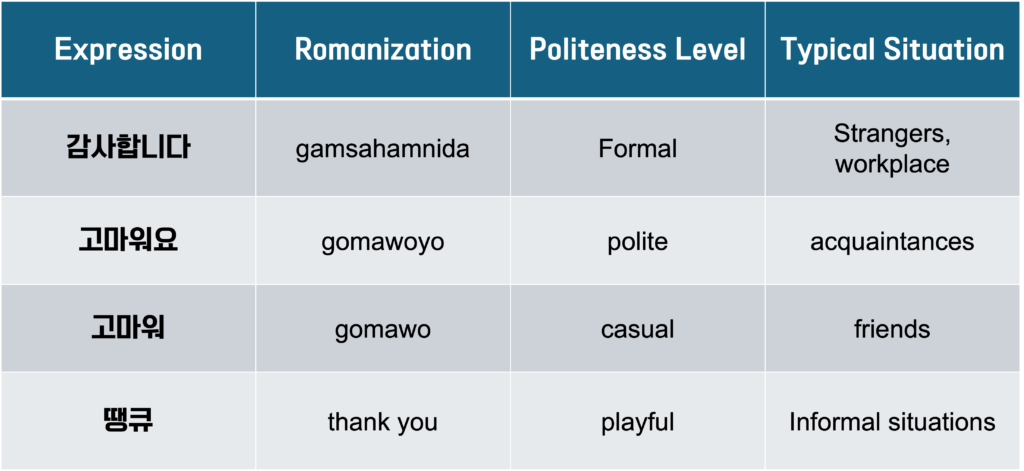
This simple chart sshow different ways of how to say thank you in Korean depending on the situation.
You can also look up these expressions in the official Korean dictionary.
Cultural Insight: Gratitude in Korean Society

Understanding how to say thank you in Korean also helps you understand Korean culture better.
In Korean culture, gratitude is often expressed through actions and reciprocity. Relationships often matter more than explicit verbal expression.
Instead of repeating “thank you”, people show appreciation through reciprocity and small gestures.
For example:
- buying a meal
- giving small gifts
- returning a favor
- bringing snacks
These actions help maintain social harmony and strengthen relationships. Because of this cultural difference, Korean learners sometimes sound overly formal if they only use 감사합니다 in every situation.
Learning when to use different expressions can help you sound more natural when speaking Korean.
If you’re interested in Korean language and culture, check out my other Korean language articles.
Final Thoughts
Learning how to say thank you in Korean goes beyond memorizing one phrase.
Depending on the situation, you might say:
- 감사합니다
- 고마워요
- 고마워
And sometimes, instead of words, you might simply show your appreciation through a small gesture.
Understanding these subtle differences will not only improve your Korean language skills but also help you better understand Korean culture.
Now you know several ways of how to say thank you in Korean in everyday conversations.